Artifacts & Monuments

Every object, inscription, and monument ever connected to Huni — including the disputed, the rejected, and the merely speculative. Only the objects made during his own reign, and the later texts that name him, are confirmed. Everything else is marked not confirmed, with a note on exactly what kind of doubt applies to it.

Contemporary Object

Objects physically made during Huni's own reign.

Confirmed

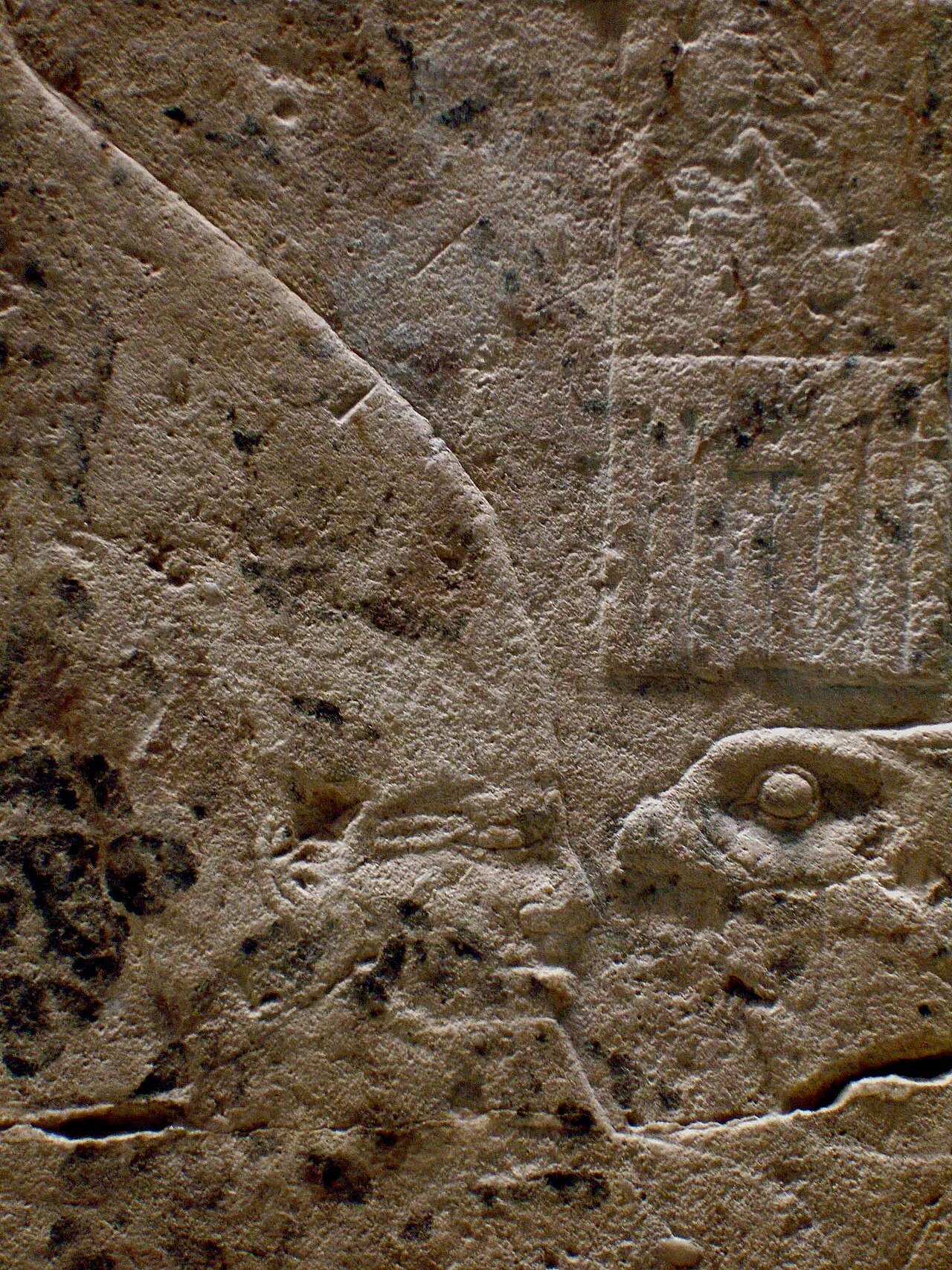
Red Granite Cone from Elephantine

A conical stele of red granite, 160 cm long, discovered on the island of Elephantine in 1909 by Henri Gauthier. It bears Huni's cartouche within a carved "appearance window" that references the "Palace of the Headband of Huni" — one of only two objects made during his own reign known to survive.
Location: Egyptian Museum, Cairo (JE 41556)

Source: Wikipedia

Confirmed

Magnesite Stone Bowl from South-Abusir

A polished magnesite vessel excavated in 2007 from mastaba AS-54 at South-Abusir. Its inscription gives Huni's name — without a cartouche — alongside the title Nesu-Bity, "King of Upper and Lower Egypt."

Location: South-Abusir, Egypt

Source: Wikipedia

Textual Source

Later inscriptions and manuscripts that mention or reference Huni.

Palermo Stone (Huni reference)
Confirmed

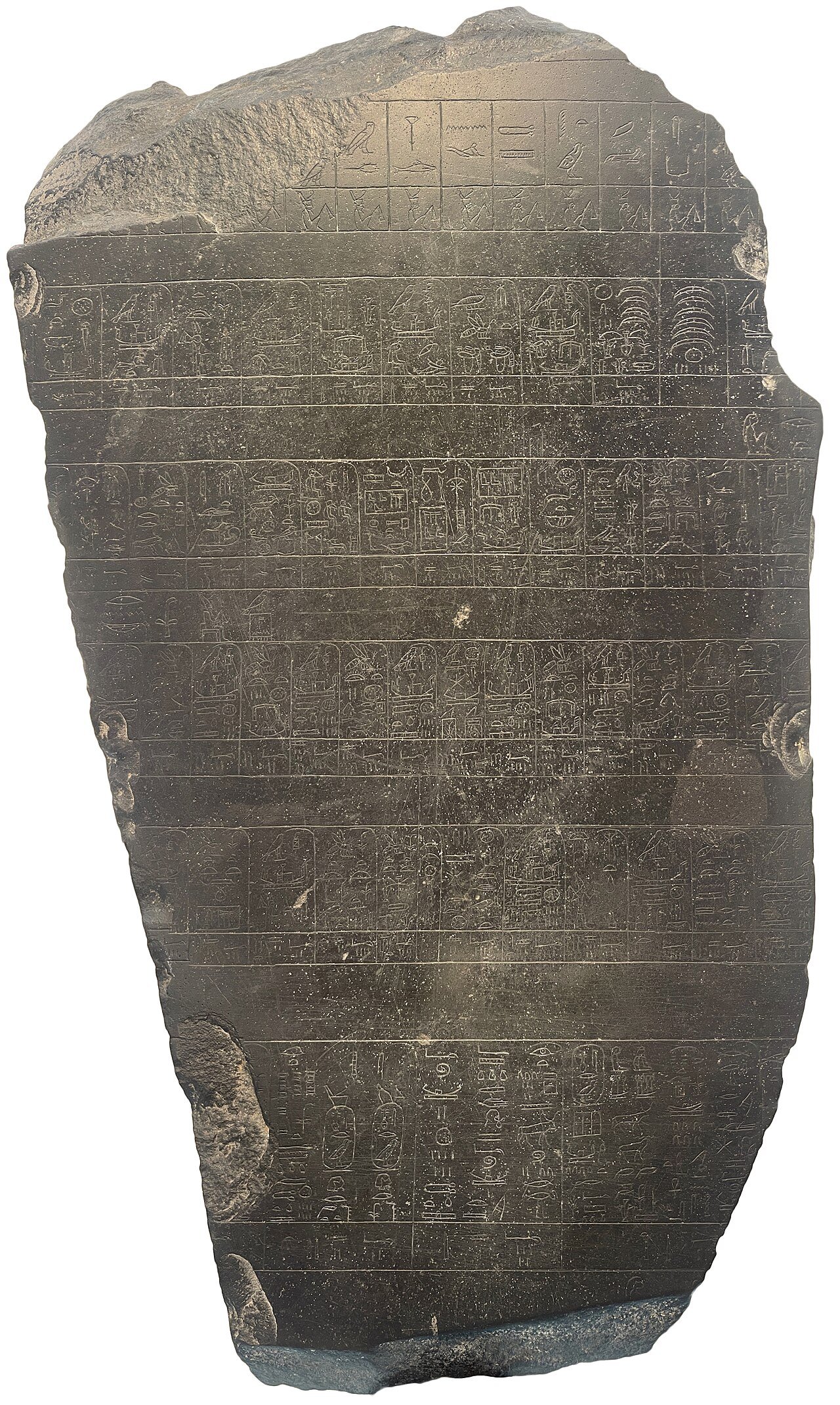
Palermo Stone (Huni reference)

A fragment of the Royal Annals of Egypt. Its reverse side records that the 5th-Dynasty king Neferirkare Kakai built or restored a mortuary temple for Huni's cult — evidence his memory was still formally honored generations after his death.

Location: Museo archeologico regionale Antonino Salinas, Palermo

CvZ, CC BY-SA 4.0, via Wikimedia Commons

Source: Wikipedia

Turin King List
Confirmed

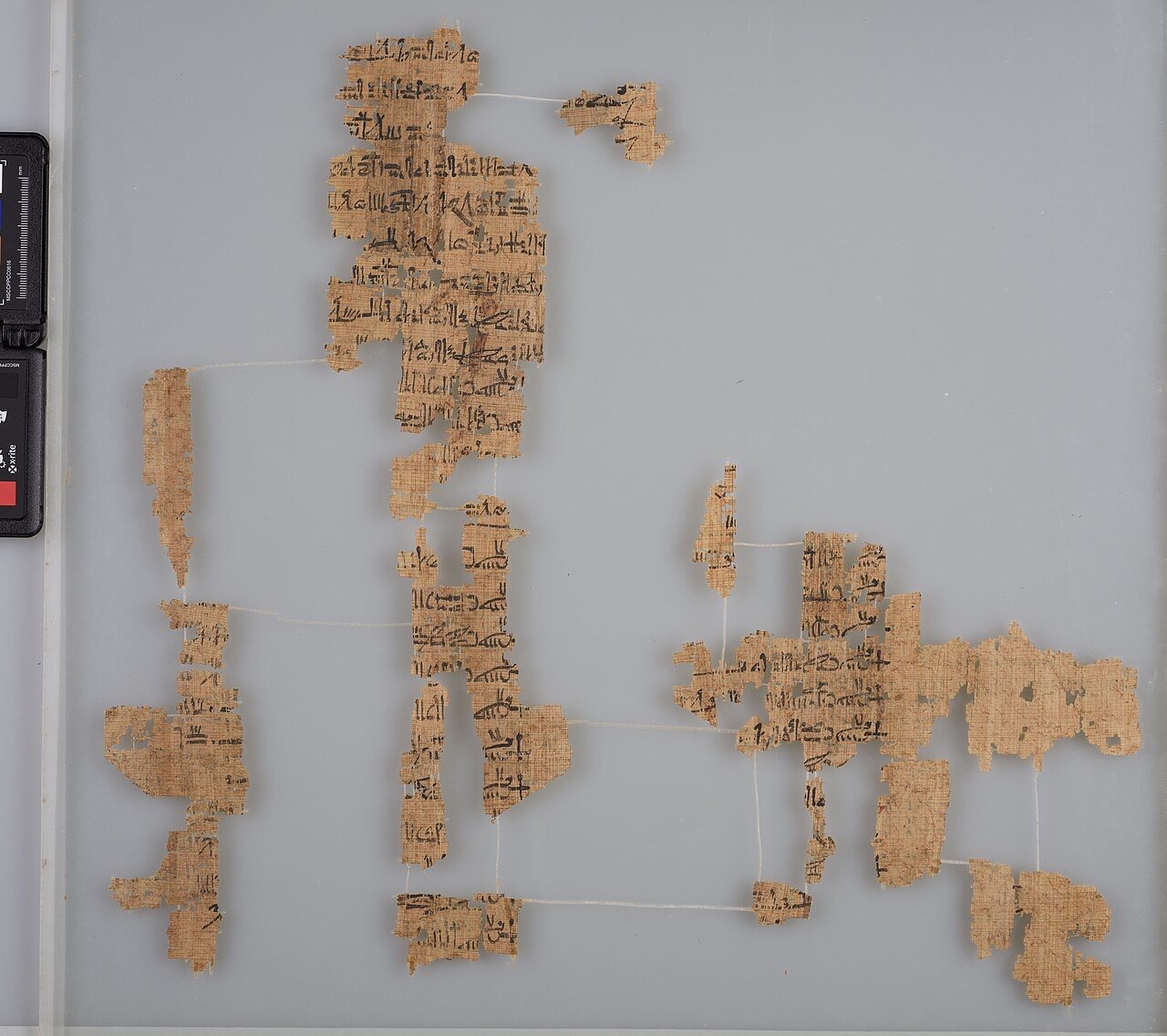
Turin King List

A hieratic papyrus compiled during the reign of Ramesses II (13th century BCE), listing Egypt's kings in order with reign lengths. Huni appears in column 4, row 8 — his name survives only as a damaged fragment reading "Hu[...]," with the rest lost to the papyrus's extensive damage (roughly half the document is missing, broken into over 160 fragments). It is the source for the commonly cited ~24-year reign figure.

Location: Museo Egizio, Turin

Photograph, public domain (Museo Egizio collection)

Source: Wikipedia: Turin King List

Confirmed

Papyrus Prisse (Instructions of Kagemni)

A Middle Kingdom literary papyrus recording Huni's death and Sneferu's accession in direct succession: "the majesty of king Huni died, and the majesty of king Sneferu was raised up as a beneficent king in this entire land."

Location: Bibliotheque nationale de France, Paris

Source: Wikipedia

Saqqara Tablet (Saqqara King List)
Confirmed

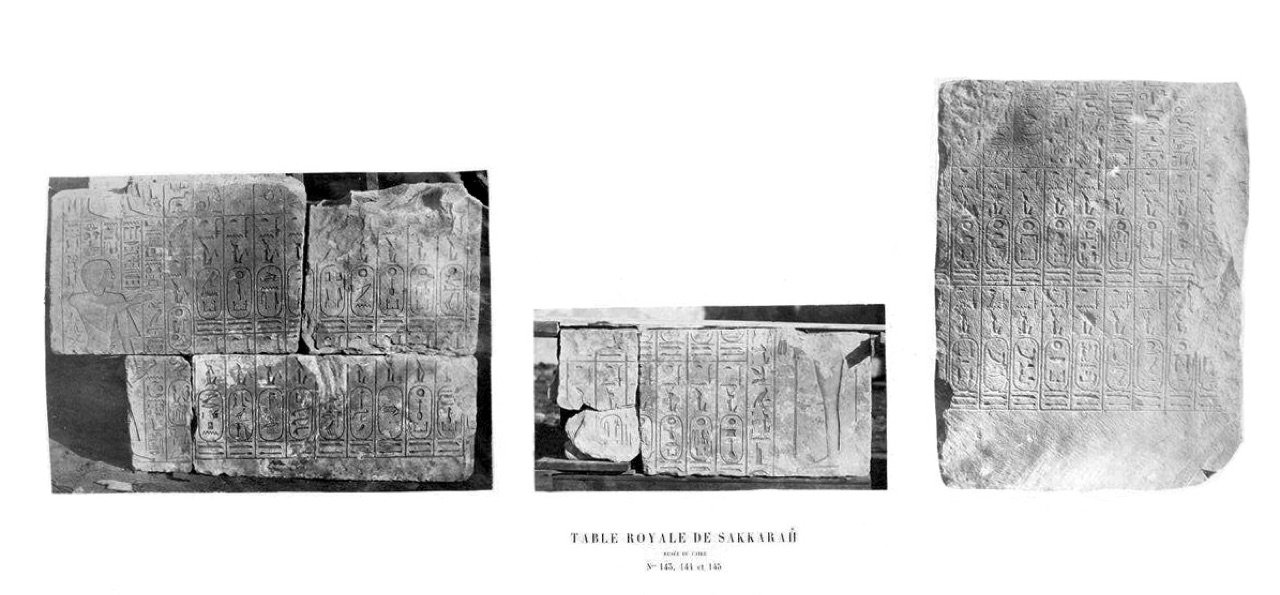
Saqqara Tablet (Saqqara King List)

A stone king list carved for the tomb of Tjuneroy (also read Tjenry), an official under Ramesses II, discovered at Saqqara in 1861. Huni appears intact as entry 44, near the end of the surviving Third Dynasty section, listed under the name "Huni" — one of the clearest surviving inscriptions of his name from any source. The tablet lists 58 kings in reverse order, of which 47 names survive.

Location: Egyptian Museum, Cairo

Emmanuel de Rougé, 1865 — public domain, via Wikimedia Commons

Source: Wikipedia: Saqqara Tablet

Confirmed

Saqqara Mastaba L6 Inscription (Tomb of Metjen)

The tomb of the official Metjen at Saqqara references a royal domain named "Hut-Nesut-Huni" (Estate of King Huni) — an indirect but contemporary-adjacent attestation of his name right at the end of the 3rd Dynasty.

Location: Saqqara, Egypt

Source: Wikipedia

Abydos King List
Not Confirmed Disputed identification — lists "Neferkare," not "Huni"

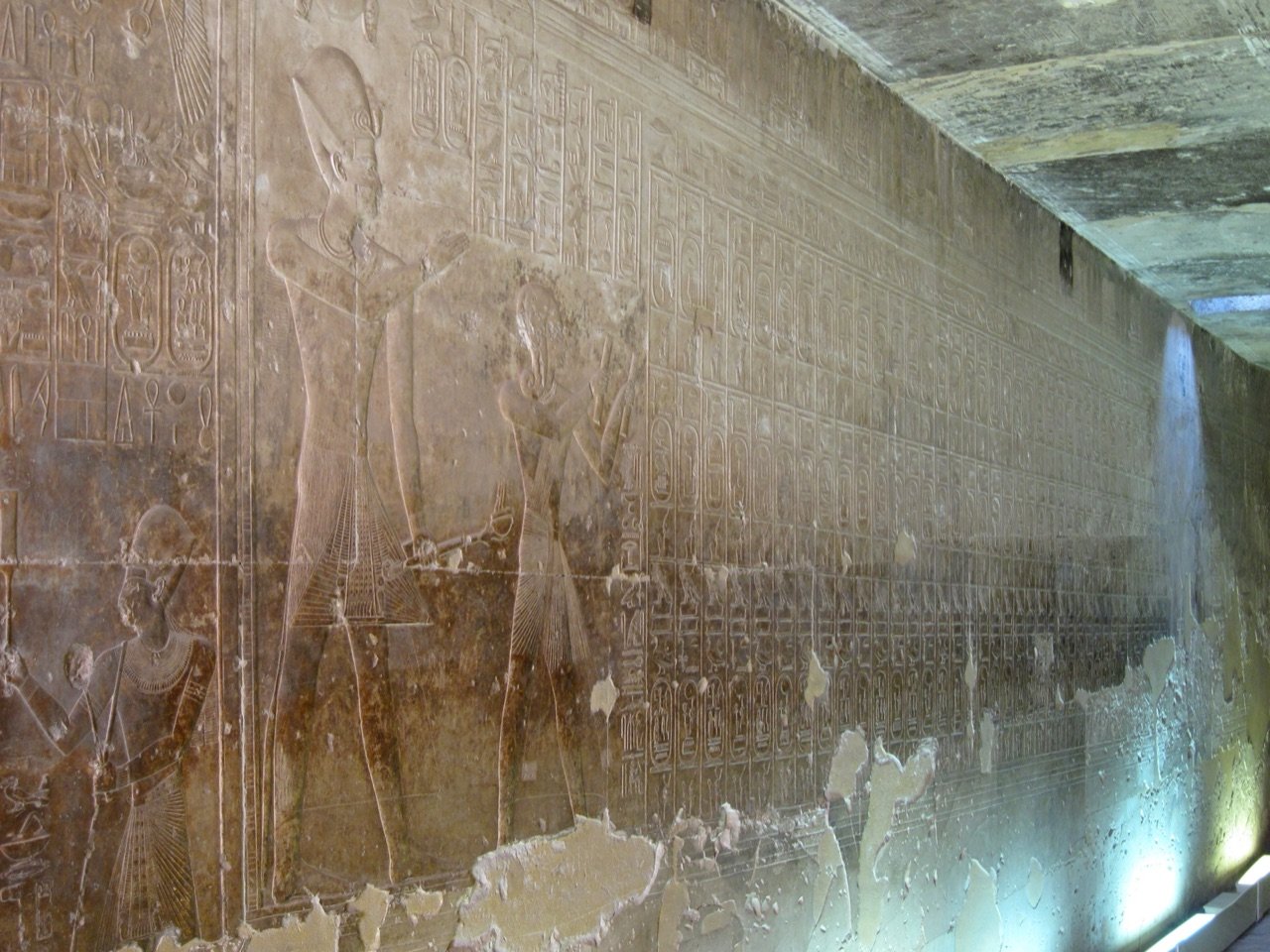
Abydos King List

A relief carved on a wall of the Temple of Seti I at Abydos (13th century BCE), showing 76 royal cartouches. Where Huni would be expected in the Third Dynasty sequence, the list instead names a king "Neferkare" — a name otherwise unknown to Egyptologists. One theory holds this was an alternate nomen (birth name) for Huni, but this is speculative; the list does not display the name "Huni" itself. See History & Facts for the full discussion.

Location: Temple of Seti I, Abydos

Olaf Tausch, CC BY 3.0, via Wikimedia Commons

Source: Wikipedia: Abydos King List; Wikipedia: Huni

Monument Attribution

Pyramids and structures that have been proposed — rightly or wrongly — as Huni's building projects.

Meidum Pyramid
Not Confirmed Rejected by modern scholarship

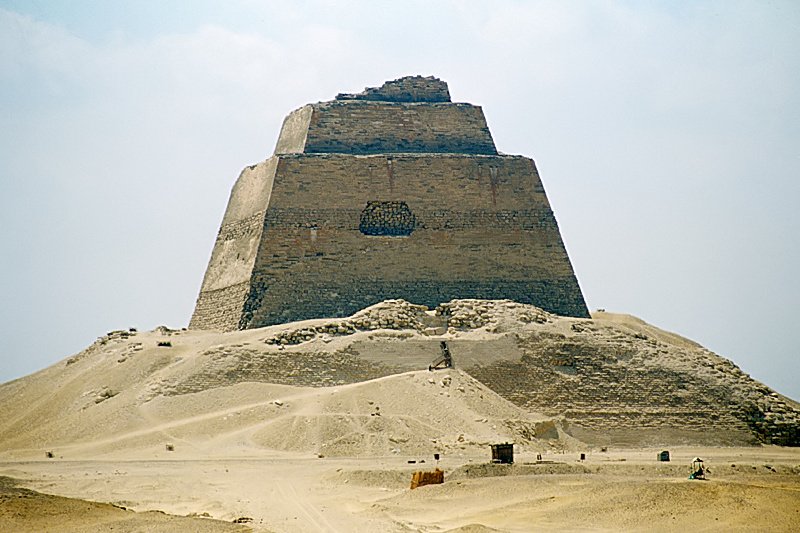
Meidum Pyramid

Long popularly attributed to Huni as builder, with completion credited to Sneferu. Current Egyptological consensus has moved away from this: the Meidum pyramid is now generally understood to have been Sneferu's own project from its inception, not a structure Huni began.

Location: Meidum, Egypt

Roland Unger, CC BY-SA 3.0, via Wikimedia Commons

Source: Wikipedia

Layer Pyramid at Zawyet el-Aryan
Not Confirmed Disputed attribution

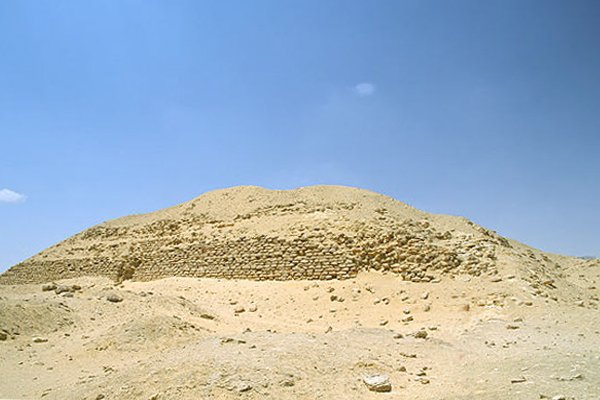
Layer Pyramid at Zawyet el-Aryan

An unfinished step pyramid conventionally linked to King Khaba. Egyptologist Rainer Stadelmann has proposed it could instead — or additionally — be Huni's project, reasoning from the theory that Khaba and Huni were the same king. This remains a minority view.

Location: Zawyet el-Aryan, Egypt

Pottery Fan, CC BY-SA 3.0, via Wikimedia Commons

Source: Wikipedia

Not Confirmed Rejected by modern scholarship

Lepsius Pyramid I at Abu Rawash

A ruined mud-brick pyramid documented by Karl Richard Lepsius in the 1840s, once theorized to be Huni's. The structure contains rock-cut tombs from the 5th-6th Dynasty, indicating later reuse of the site — this attribution to Huni is no longer accepted.

Location: Abu Rawash, Egypt

Source: Wikipedia

Not Confirmed Disputed — considered the most credible of this group

Step Pyramid of Elephantine

A small step pyramid at the eastern end of Elephantine island. Some scholars consider it the single "cultic pyramid" most plausibly credited to Huni of the small provincial step pyramids sometimes grouped with his reign — though even this attribution is contested by others.

Location: Elephantine Island, Egypt

Source: Wikipedia

Not Confirmed Confirmed to belong to Sneferu, not Huni

Seila Pyramid

Sometimes loosely grouped with the small step pyramids theorized to be Huni's. Two stelae bearing Sneferu's name were found in front of it, definitively identifying it as Sneferu's monument — included here specifically to correct the mix-up.

Location: Faiyum Oasis, Egypt

Source: Wikipedia

Not Confirmed Speculative — no inscriptional evidence

Other Minor Cultic Step Pyramids

A scatter of small, chapel-like step pyramids along the Nile — at Naqada, el-Kula, Edfu South, Sinki, and Zawyet el-Maiyitin — are sometimes grouped with Huni's reign as part of a hypothesized province-wide building program. None carry an inscription naming him; the attribution rests entirely on architectural style and rough dating.

Location: Various sites along the Nile

Source: Wikipedia

Questionable Artistic Object

Portraits and steles sometimes linked to Huni on stylistic grounds alone, without an inscription confirming it.

Granite Head, Brooklyn Museum
Not Confirmed Tentative identification

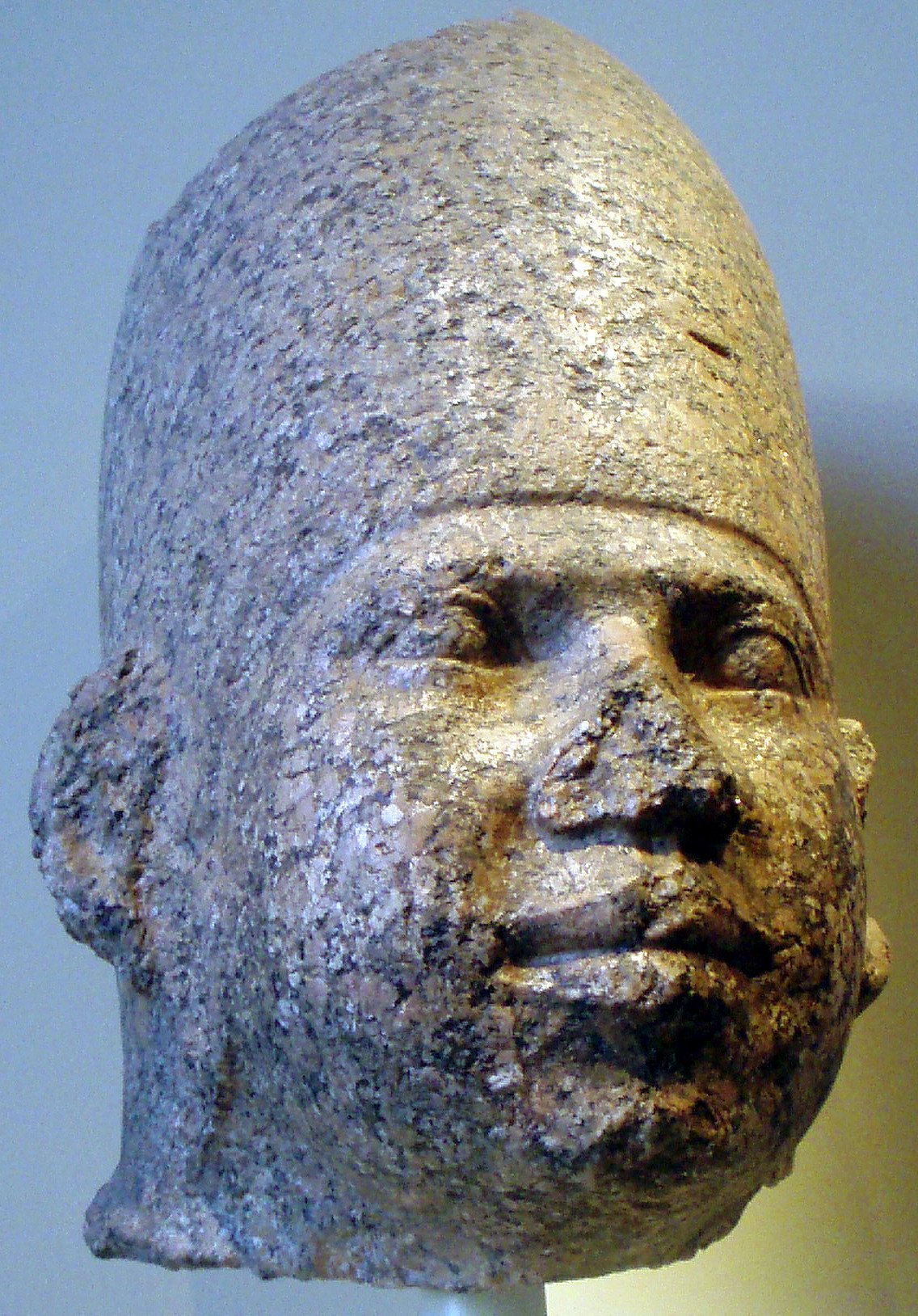
Granite Head, Brooklyn Museum

A granite head of an Old Kingdom pharaoh, dated circa 2650-2600 BCE, tentatively identified by some as Huni on stylistic and chronological grounds. No inscription confirms the subject's identity, so the identification remains a proposal rather than a fact.

Location: Brooklyn Museum, New York

Captmondo, CC BY-SA 2.5, via Wikimedia Commons

Source: Wikipedia; Brooklyn Museum

Horus-Qahedjet Stele, Louvre
Not Confirmed Highly questionable — authenticity itself disputed

Horus-Qahedjet Stele, Louvre

A stone stele bearing the Horus name "Qahedjet," sometimes proposed as an alternate name for Huni. Both the identification and the stele's own authenticity have been repeatedly questioned by scholars — some believe it may be a modern forgery, or a genuine piece actually dedicated to Thutmose III over a thousand years later.

Location: Musee du Louvre, Paris (E. 25982)

Juan R. Lazaro, CC BY 2.0, via Wikimedia Commons

Source: Wikipedia

Burial Site

Tombs where Huni himself has been speculatively proposed as the occupant.

Not Confirmed Speculative

Mastaba M17 at Meidum

A massive mastaba tomb, roughly 100 by 200 meters and originally 15-20 meters high. Egyptologists Rainer Stadelmann and Peter Janosi have proposed it belonged either to a crown prince or to Huni himself. The mummy inside was destroyed in a WWII bombing raid before modern analysis was possible, and the burial chamber had already been plundered in antiquity.

Location: Meidum, Egypt

Source: Wikipedia

Not Confirmed Speculative

Mastaba AS-54 at South-Abusir

The tomb where the inscribed magnesite bowl (above) was found. Egyptologist Miroslav Barta has proposed two possibilities for its owner: a very high-ranking official of the era, or King Huni himself.

Location: South-Abusir, Egypt

Source: Wikipedia